
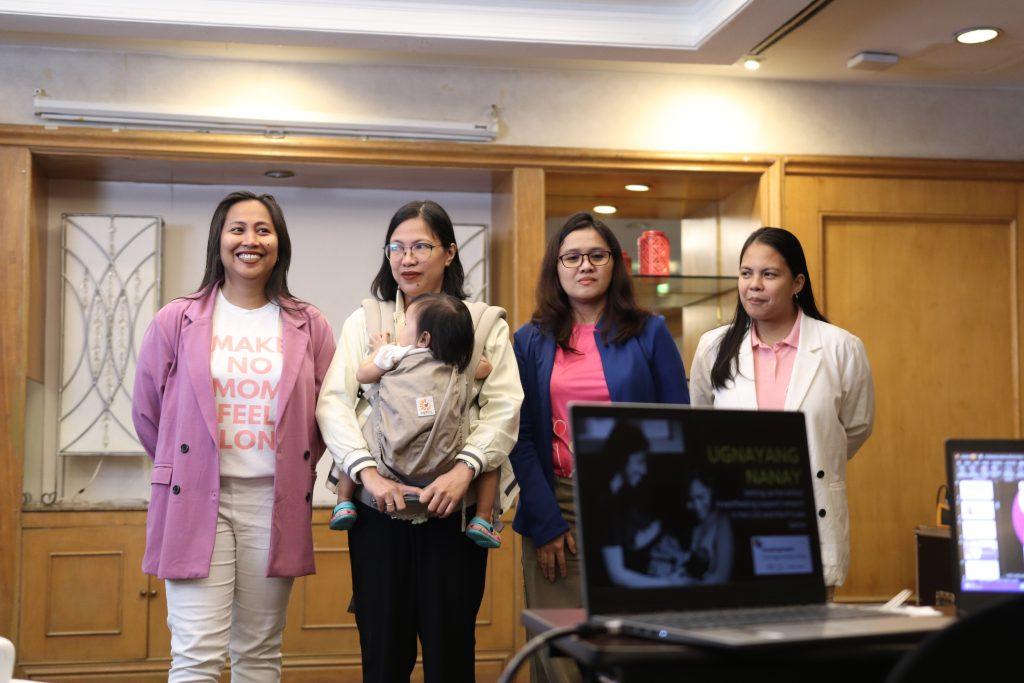
Can Development Entrepreneurship be used by a small NGO operating in a medium-sized city in Mindanao, composed of volunteer mothers without previous experience in policy reform? The story of how the “Modern Nanays of Mindanao” or MNM pushed for the creation of the Cagayan de Oro Human Milk Bank and Lactation Support Center – including the construction of a facility for this purpose – suggests the answer is yes. Moreover, MNM’s advocacy for this lactation support center came before they joined the DE Mentoring program, indicating that NGOs and CSOs – including those that are located outside the National Capital Region, working on sub-national reforms, and composed of volunteers who have had no special training in policy reform – are already applying DE principles.
Executive Summary:
Breastfeeding is necessary for early child development. However, national statistics indicate that the Philippines still needs to do more for breastfeeding. The 2021 Expanded National Nutrition Survey of the Food and Nutrition Research Institute found that only 41.8% of infants and young children continued breastfeeding at two years.[1]
Nadine Casino scanned the situation in Cagayan de Oro to discern factors that contributed to this situation. She saw that while there are service delivery mechanisms for breastfeeding support from government and private organizations, these are siloed and focused on breastfeeding initiation. Few civil society organizations and government agencies focus on sustaining breastfeeding for the first 1,000 days. So, the initial breastfeeding rate is high, but the rate of sustained breastfeeding is lower. Nadine saw the problem as the failure to provide continuous support across the spectrum of breastfeeding needs and concerns over the first 1,000 days of the child.
Modern Nanays of Mindanao began as a volunteer group addressing challenges related to breastfeeding. Driven by a desire to support other mothers, they organized workshops and provided counseling despite limited time and resources. However, they soon realized that their efforts, while valuable, were neither scalable nor sustainable. Seeking broader impact, they reached out to government offices, where they were received warmly but only offered token roles, such as invitations to annual speaking engagements, rather than opportunities for meaningful, ongoing collaboration in program development.
Undeterred, they continued their efforts until they gained recognition as crucial actors in the breastfeeding advocacy space. This persistence led to their appointment with a local government body focused on infant and young childcare as part of the City Nutrition Committee. Their influence grew when a city councilor sought their input on establishing a milk bank. Collaborating with other advocates, they successfully advocated for a facility offering comprehensive breastfeeding support. This advocacy culminated in a City Ordinance mandating the construction of a dedicated building, establishing a unit with full-time staff, and provisions for multi-party collaboration in program design for breastfeeding.
Reflecting on this journey, Nadine Casino recognizes the application of Development Entrepreneurship principles. She believes that others can do the same if an organization like theirs can use DE to achieve policy reform.
The Reform Challenge
Breastfeeding challenges in the Philippines
Breastfeeding is the child’s first and most essential food system, providing optimal nutrition that supports brain development, primes the immune system, and significantly reduces mortality and illness in children under five. The recommended practice is for infants to be exclusively breastfed for the first six months, followed by continued breastfeeding up to 24 months and beyond, while introducing a diverse, nutrient-rich complementary diet from six months onwards. During the first 1,000 days of a child’s life, optimal Infant and Young Child Feeding (IYCF) practices establish the foundation for lifelong health. Without sufficient nutrition, children are at risk of malnutrition and stunting—often manifested as low height-for-age—which impairs their ability to reach their full physical and cognitive potential.
Unfortunately, the 2021 Expanded National Nutrition Survey by the Food and Nutrition Research Institute revealed concerning statistics: only 41.8% of infants and young children in the Philippines continue to be breastfed over two years. The survey also highlighted that mothers are not adopting optimal IYCF practices due to insufficient information and support throughout their motherhood journey. Alarmingly, one in three Filipino children is stunted—a clear indication that many mothers are not receiving the necessary guidance and assistance to sustain breastfeeding and optimal feeding practices.
The Situation in Cagayan de Oro
In the 2020s, Cagayan de Oro, a medium-sized city on the southern Philippine Island of Mindanao, boasted a robust network of breastfeeding support organizations. Despite this, the city’s breastfeeding program faced significant challenges in delivering a comprehensive continuum of care. While many volunteers focused on initiating breastfeeding—leading to a high percentage of mothers starting the practice—few were dedicated to sustaining breastfeeding efforts beyond the initial months. As a result, the rate of mothers who continued to breastfeed throughout the recommended 1,000 days was significantly lower.
Barangay health workers and primary care providers were often overwhelmed by competing priorities within the health system, preventing them from focusing exclusively on managing infant feeding issues. The city government-operated JR Borja Memorial Hospital continued to provide routine maternal and childcare but struggled with an underfunded breastfeeding program that lacked dedicated facilities and a specialized workforce. Volunteer peer counselors, while committed, could not serve full-time, and both health professionals and trained peer counselors were often unprepared to address complex breastfeeding challenges such as breast inflammation, inverted nipples, re-lactation support, and other concerns.
For many mothers, successfully implementing recommended breastfeeding practices was hindered by insufficient and inconsistent support, cultural barriers, misconceptions, and conflicting information—exacerbated by the aggressive marketing of artificial food products. Overcoming all these required comprehensive interventions and assistance covered the full spectrum of breastfeeding needs and challenges over the first 1,000 days of a child’s life.
The Reform Experience
When Nadine Casino gave birth in 2012, she immediately experienced breastfeeding challenges. Encouragement, information from her pediatrician, and training as a breastfeeding counselor helped. She became so committed to breastfeeding that she brought her infant to classes after finishing her master’s degree. She also decided to “pay it forward” by organizing her friends to hold events, such as human milk letting drives, counseling sessions, lactation massages, etc.
Their group eventually became known as the “Modern Nanays of Mindanao” (“Modern Mothers of Mindanao”). When the Marawi Siege happened, MNM mobilized volunteers to work in the evacuation sites to help mothers breastfeed their children. Over time, they established themselves as an active voice that could influence decision-makers.
They realized early on that their efforts could not be sustained nor expanded unless they engaged the government. As they sought the support of government officials, they slowly learned to “think and work politically.” They also learned the technical aspects of how the public health system works.
MNM’s visibility in the breastfeeding support circles increased. In 2015, they were made a member of the City’s Nutrition Committee and the Infant and Young Child Feeding (IYCF) Task Force and continued to innovate IYCF programs, create allies, and garner awards and recognition.
President Rodrigo Duterte signed into law RA 11148, the “Kalusugan Ng Mag-Nanay Law” on September 2018[2]. This is intended to scale up intervention programs for the first 1,000 days of a child’s life. Responding to this law, in 2021 Cagayan de Oro City Councilor Joyleen “Girlie” Balaba initiated consultations for an appropriate policy and intervention. She asked MNM for insights regarding her resolution to create a human milk bank.
MNM worked with recognized and respected pediatricians such as Dr. Stephanie Denise “TP” Alagadan and Dr. Jessamine Sareno-Ang to submit their recommendations. Their coalition proposed that the facility not only store and dispense human milk but also provide comprehensive support for sustainable feeding practices. They also contended that instead of being a section under the pediatric department, it should be a stand-alone unit of the hospital, which should have full-time personnel.
The chairperson championed the resolution for the Committee on Women and Children, Councilor Edna Dahino; Family Relations Committee Chairperson, Councilor Girlie Balaba; and Councilor Maria Lourdes Gaane, championed the proposal. On October 25, 2021, City Ordinance No. 14183-2021, “The Cagayan de Oro Human Milk Bank & Lactation Support Center Ordinance” was enacted.
Impact of the Reform
The ordinance mandated the provision of lifesaving breast milk to sick babies, comprehensive, equitable, and compassionate breastfeeding support to mothers, the establishment of a hospital-grade human milk bank, construction of a milk bank-lactation facility, and hiring of lactation support specific personnel – all of which was estimated to cost more than 8 million pesos.
It also mandated the creation of an advisory board and technical working group to convene stakeholders. This group would integrate existing maternal-child nutrition and IYCF programs into the Center’s work.
Dr. TP Alagadan, the first chairperson of the Human Milk Bank and Lactation Support Center, worked to implement the Ordinance immediately. She initiated the equipment purchase, applied for construction permits, and hired the needed personnel. By early 2023, the Center was ready to hire its first Nurse Coordinator and start the construction of the milk bank building.
MNM continued to help in developing programs and interventions. They updated their network on developments regularly. Early in 2024, Dr. Alagadan resigned to pursue development work in Africa. Her successor was Dr. Shiela Taal, a firm breastfeeding champion.
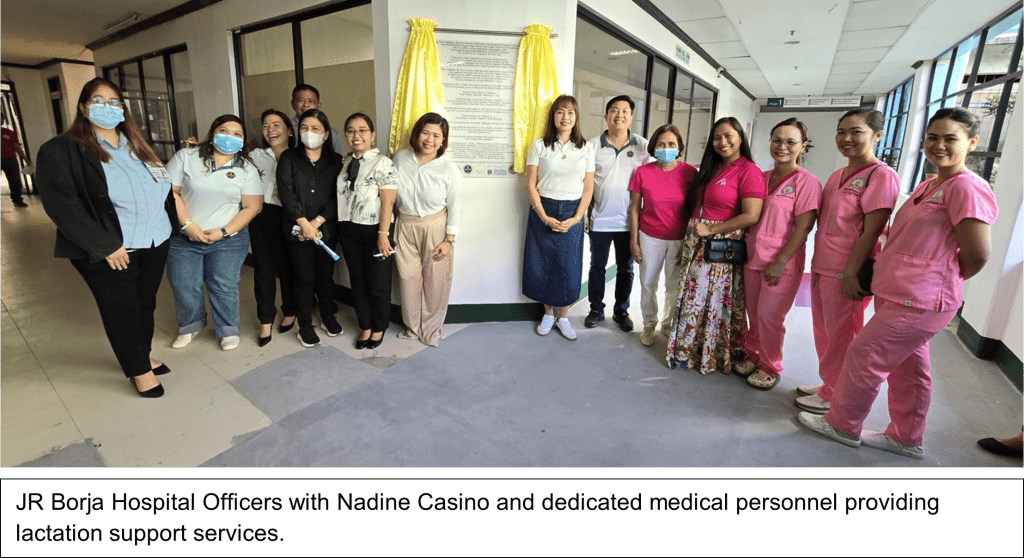
After the Ordinance was passed, the HMBLSC team was formed – a pediatrician, two lactation nurses, and one nurse aide. They have been working with hospital personnel to deliver primary and advanced breastfeeding management to patients who gave birth at the JRB General Hospital. They also respond to referrals from the Outpatient Department – patients who have problems like mastitis, engorgement, tongue ties, and cleft babies. These services are provided for free by the city government.
Two significant provisions of the Ordinance were collaboration between civil society and the official government health system and coordinating government efforts to provide a whole-of-government approach. Private-public collaboration on formulating the Center’s services and procedures earned the JRB General Hospital’s Level 2 accreditation and Mother Baby Friendly status in 2023.
What comes next?
The HMBLSC office was inaugurated on August 22, 2024. It is a 165-square-meter room inside the JRB General Hospital (JRBGH). It serves as a hospital service center and a community facility. It has complete access to hospital facilities such as the laboratory and specialized medical departments whose services are needed by a breastfeeding mother and child. The human milk bank part has a 17-liter pasteurizer that automatically thaws, pasteurizes, cools, and chills human milk. There are areas for private and individualized breastfeeding counseling and training, conferences, classes, and workshops.
Ways of Working and Relevance of Development Entrepreneurship
MNM intuitively used the 12 Development Entrepreneurship Principles to pursue the Cagayan de Oro Human Milk Bank and Lactation Support Center. Only after they joined the Development Entrepreneurship Mentoring Program were they about to put a name on the things they had done and experienced.
The 5 Entrepreneurship Principles
| Just Start | MNM members started with their own breastfeeding experiences. They lacked the technical skills to pursue change but could “just start” with small projects like talks and demonstrations. |
| Small bets and learning by doing | Their initial breast milk-letting drives in 2012 were small bets, from which they learned important lessons in dealing with mothers. Their response to the Marawi siege in 2017 was a small bet (at least, initially). Nadine Casino said that showing up in government offices was “small bets” from which they gained insights and confidence in dealing with the government. |
| Expect and exploit surprises | Nadine Casino said, “The advocacy landscape is unpredictable, and being open to unexpected opportunities allows us to exploit them effectively. Whether it was a sudden policy window or a new ally joining our cause, we remained agile and responsive, continuously aligning our actions with emerging opportunities.” Until now, they could not pinpoint the event that caught Councilor Balaba’s attention. Was it milk letting? An awareness events? A training session? Whatever it was, it led to the Councilor reaching out to MNM, a surprise they effectively responded to. |
| Build coalitions and networks | MNM sought and gained full support from known pediatricians, one of whom was Casino’s pediatrician, Dr. Jessamine Sareno-Ang. Another was Dr. TP Alagadan, who became the first HMBLSC chairperson. Dr Alagadan was also an experienced hospital administrator and known innovator who knew the bureaucratic and administrative landscape. She became MNM’s champion within the health system. She navigated the proposals, legislation, and bargaining while taking in our vision to make enabling mechanisms happen to make the future happen. MNM “invited themselves” into the City Nutrition Committee and IYCF task force through their constant engagement and lobbying for support. These activities established MNM as the lead mother support group organization in Cagayan de Oro, giving them credibility to advocate for and participate in policy reform. |
| Future can be influenced with action | MNM had no long-term plan for realizing its vision of comprehensive support for all mothers. They took whatever steps they could to pursue their commitment “To Make No Mom Feel Alone” (MNM’s slogan). These steps included holding affordable communication and information events and talking with government officials at all levels. These led to more engagement until MNM found itself in a position where it could more effectively influence the future. |
The 4 Leadership Behaviors
| Grit | Many of the rejections MNM experienced were along the lines of “We’re already doing that.” That meant the government unit they were talking with was doing something about breastfeeding, and that was enough. There were also “Don’t tell us what to do,” “Not now,” and other rejections. In the 12 years of their advocacy, MNM never let responses like these stop them from pursuing our vision. It took 11 years before a legislator decided to support breastfeeding significantly. Luckily, MNM’s resolve had never wavered. They had enough grit to bounce back from rejections – so they were ready when the opportunity came. |
| Autonomy | Nobody told Nadine Casino to hold breastfeeding workshops or, later, to found MNM. Nobody told MNM to go to Marawi during the siege to help mothers. They did not need external reinforcement or prodding; their drive came from inside each of them. Even without a guaranteed timeline of success or a clear pathway, they did what they felt mothers needed help with. MNM was self-directed and self-led. |
| Confidence | Experience and learning brought out MNM’s confidence in pursuing reform. Nadine had to learn the technical aspects of breastfeeding to be a legitimate advocate. So that, when given the chance to speak, she would be heard by all actors. |
| Humility | Humility was something she also had to learn. With “youthful idealism and arrogance,” she was “I was brash in my words when things were not going ideally.” She believed the government needed to know what to do and create solutions because it was “their job.” She got agitated when the government implemented less than the ideal solution in their community. She said that instead of making allies, it alienated her. She learned to accept her mistake and become humble enough to admit that “though I meant well, my eagerness can be off-putting to some.” She learned to listen more and empathize, which worked better at fostering collaboration. “Understanding the pains of the service providers and health system helped me understand why creating a reform was challenging and why change does not happen swiftly,” she said. |
3 Criteria for Transformative Impact
| Impact | The local government policy (the Ordinance) created a physical point-of-care facility, a dedicated and specially trained workforce to deliver individualized lactation management, and an enabling mechanism for multiple stakeholders to work together and strengthen the breastfeeding service delivery network in Cagayan de Oro City. The desired outcome, which MNM, the City Government, and other partners continue to work on, is that every mother who will give birth in Cagayan de Oro will receive skilled and individualized location management in their child’s first 1000 days of life. |
| Political Feasibility | The HMBLSC ordinance was an innovation that was also a sound political move. Legislators, executives, and supporters took pride in this landmark project. A project for the welfare of mothers and babies often gets support from any group, party, or sector. |
| Sustainability | The biggest challenge for breastfeeding advocates was finding funding and human resources to sustain their advocacy. It was difficult for the government health system to accept the advocates, who were not an organic part of the organizational structure. The Ordinance allowed the community of mothers to engage in policy development and have a say on budget and program development. The volunteer community, working through the HMBLSC, can propose financial allocations in the annual investment plans on health to fund advocacy programs, routine milk-letting activities, personnel, and operational expenses of a milk bank. |
Looking to the Future
Despite the momentous victory of passing the Ordinance, MNM believes that more work must be done. MNM has set its eyes on establishing a comprehensive Infant and Young Children Feeding (IYCF) Service Delivery Network. Doing this will require more than a building; it will require a functional network to reach every breastfeeding mother in the community in the barangays.
Since they joined the Development Entrepreneurship Mentoring program, MNM has also aspired for a national lactation and IYCF management counseling program. From their experience, they know that breastfeeding volunteers can only do so much with their resources, but if they get paid for their work, they can do much more. So, they are working for government and industry recognition of breastfeeding support organizations as professional health service providers so they can get reimbursed for their efforts. MNM believes they can apply the 12 Development Entrepreneurship principles to achieve this reform.
Conclusion
Even before MNM learned about DE, Nadine and her colleagues had already demonstrated behaviors manifesting grit, autonomy, confidence, and humility (the latter discovered the hard way).
They started with who they were, what they knew, who they knew; they began with small activities and learned as they went along. They built partnerships with pediatricians and other breastfeeding volunteers. They learned from rejections. Even though they did not have a concrete idea about how they could get their advocacy institutionalized, they did what they could – and were in a solid position to influence the desired policy when the opportunity came.
When they provided input to the proposed Ordinance, they looked for impact not only to introduce breastfeeding but to address all concerns that mothers encounter in the first 1,000 days of a child’s life. The engagement of government resources meant this intervention could be sustained. And their partnership with multiple stakeholders helped the political feasibility of the reform.
So, while advocating for breastfeeding, it turns out that MNM demonstrated the 12 DE principles. And if they can, other NGOs and CSOs could – even those that operate outside the National Capital Region or those that are not composed of professional policy reformers.
However, verbalizing these principles and organizing them into the DE framework makes it easier to share the experience with other NGOs and CSOs. Nadine and co hope to convince other organizations to use the Development Entrepreneurship approach to influence the future and create a better society for every Filipino.


[1] 2021 ENNS – National Results Dissemination, https://www.scribd.com/document/747228306/2021-ENNS-National-Results-Dissemination. Uploaded by rochelleann.gregorio.educ on Juyl 02, 2024
[2] https://elibrary.judiciary.gov.ph/thebookshelf/showdocs/2/86373